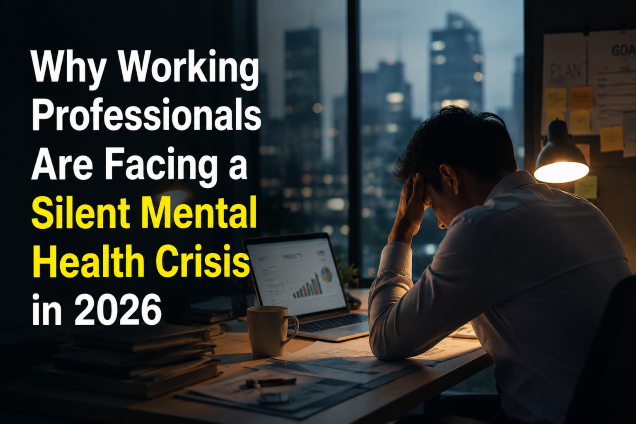

Can you see how stress impacts your body?
During times of stress, your shoulders become tense.
In case of stress, your breathing will become shallow.
Because of stress, you have trouble sleeping at night.
Psychological issues impact your whole body and not just the mind.
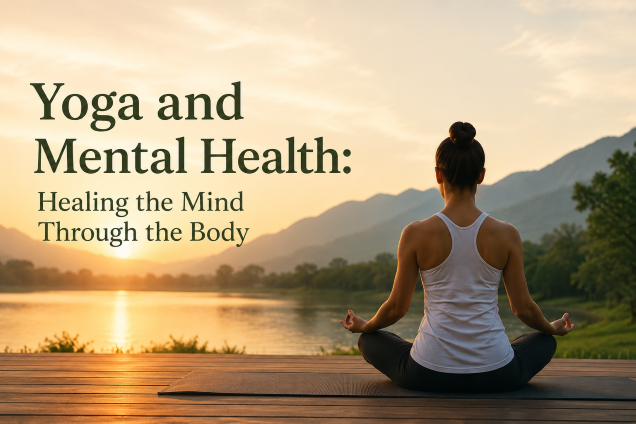
For this reason, more and more people resort to yoga, which is not only for physical fitness, but also mental wellness.
Yoga is much more than merely stretching or exercising.
It is an amazing tool which helps to unite your mind, body, emotions, and energy.
Nowadays, we all live in stressful environments, with numerous issues such as stress, anxiety, overthinking, and exhaustion being so widespread, so yoga can offer you relief.

What Is the Connection Between Yoga and Mental Health?
A lot of people tend to assume that yoga involves nothing but flexibility exercises.
But truth is, yoga includes:
● Bodywork
● Breathing techniques
● Mental practices
● Relaxation
● Self-awareness
All these together have a beneficial effect on the nervous system as well as psychological well-being.
While relaxing your body, you may also relax mentally.
On the other hand, calming down mentally can contribute to physical relaxation as well.
This mind-body connection makes yoga great for mental well-being.
Why Mental Health Problems Often Show Up in the Body
Stress and emotions don’t always stay in your mind. Rather, they manifest themselves physically.
Some of the most common cases are:
| Neck and Shoulder Tension A lot of people tend to store emotional stress in their upper body part i.e. Neck and Shoulder. | Headaches Anxiety and stress often cause regular headaches. |
| Insomnia Your active mind tends to keep you awake at night. | Fatigue Being mentally exhausted can make one physically exhausted as well. |
| Gastrointestinal Disorders The connection between the gut and the mind is the reason why emotional stress causes digestive issues. |
Yoga enables you to let go of all this stress.
How Yoga Helps Reduce Stress
This stress triggers the “fight or flight” reaction.
This reaction serves an important purpose in emergency situations.
But there are those who live under the influence of this reaction for weeks, months, or even years.
The practice of yoga helps our body relax into what is known as the “rest and restore” reaction.
Thus, individuals could enjoy:
● Lesser levels of stress
● Enhanced sleep
● Good concentration
● Emotional balance
| Yoga and Anxiety Anxiety tends to fixate your mind on the future . Questions begin to form in your mind like: ● What will happen if things go wrong? ● What will happen if I mess up? ● What will people think of me? But yoga teaches your mind to return to the present. As opposed to worrying about tomorrow, you focus on: ● Breathing ● The body ● Emotions | Yoga and Overthinking In our last blog, we talked about how overthinking causes mental exhaustion. One reason for overthinking is that the mind never has any downtime. Yoga offers you some mental downtime. During yoga sessions, your mind stops focusing on all your thoughts and starts focusing on physical actions. Over time, this helps you create a better understanding of your thoughts. The purpose is not to stop your mind from thinking. The purpose is to not be influenced by every thought that pops up in your head. |

Yoga and Emotional Health
People tend to bottle up their feelings because they lack knowledge about how to deal with them.
In the long run, these feelings may lead to:
● Stress
● Irritability
● Anxiety
● Emotional exhaustion
Practicing yoga helps promote self-awareness.
The more people get in touch with themselves, the more they get in touch with their feelings.
Self-awareness is the first step to emotional healing.

The Role of Breathing in Mental Wellbeing
Another thing that makes yoga unique is breathing exercises.
The link between breathing and mental state is very strong.
It is important to consider the nature of your breaths during the following situations:
When You Are Stressed
Your breathing becomes shallow and quick.
When You Are Calm
Your breathing becomes deeper and slower.
Yoga focuses on breathing techniques designed to relax the mind and body.
Mental Health Benefits of Regular Yoga Practice
Those that practice yoga have been known to show improvement in the following areas:
- Management of Stress
- Sleep Quality
- Increased Concentration
- Resilience
- Self-awareness
You Don’t Need to Be Flexible to Start Yoga
A common misconception about yoga is that yoga is for flexible people.
This is not true.
Anyone can do yoga.
It does not require:
● Complicated poses
● Special equipment
● A lot of practice
The true essence of yoga does not lie in perfection.
The essence lies in connection with yourself.
Simple exercises can enhance mental health as well.
Yoga Is Not a Quick Fix
Despite the many advantages of yoga, one should maintain realistic expectations.
The factors that impact our mental well-being include the following:
● Lifestyle
● Social relationships
● Sleep quality
● Amount of stress we feel
● Cognitive processes
● Our emotional experiences
As such, yoga can be a great addition to our strategy for dealing with mental health problems.
| Small Steps Can Create Big Changes It is not necessary for you to spend hours each day practicing yoga. As little as 10-15 minutes each day will help. The important thing is that you do it regularly. Often, consistent small practices produce better results than intense one-offs. | Healing Begins with Awareness Mental well-being is more than being stress-free. It involves developing skills for handling life challenges in a better way. The practice of yoga imparts an invaluable lesson that, “Healing is not always an activity of the mind.” Sometimes healing requires reconnecting with the body. A healthy interaction between the mind, body, emotions and energy makes it possible. |
Book a Free Strategy Session with Coach Sangeeta
In case any of these issues like stress, anxiety, overthinking, emotional fatigue, and confusion is causing you some trouble, consider getting professional help.
Coach Sangeeta, who is one of the most respected mindset coaches from India, assists people to boost their mental health and achieve true transformation of life.
During Your Free Strategy session, You Will Be Able To:
✔ Know what is causing you stress and anxiety
✔ Discover techniques for maintaining your emotional well-being
✔ Gain increased self-awareness and self-confidence
✔ Practice more effective thinking skills
✔ Plan your journey towards a better life
Claim Your Free Strategy Session Now
Frequently Asked Questions on Yoga and Mental Health
Yoga helps reduce stress, improve emotional balance, calm the nervous system, and increase mindfulness and self-awareness.
Yes. Yoga encourages relaxation, controlled breathing, and present-moment awareness, which can help reduce anxiety symptoms.
Many people use yoga as a natural way to manage stress because it supports both physical and mental relaxation.
Even 10–20 minutes a day can provide benefits when practiced consistently.
Yoga may not eliminate thoughts, but it can help create mental calm and improve your ability to manage overthinking.